The five storied pagoda of Kōfuku-ji in Nara, at dusk.
Founded around 700AD, an important buddhist temple.

Horseback archery in Kyoto
Yabusame is a type of mounted archery in traditional Japanese archery. An archer on a galloping horse shoots three special “turnip-headed” arrows successively at three wooden targets. We were lucky to find it coincided with our Kyoto visit.
This style of archery has its origins at the beginning of the Kamakura period. The original shogun leader from Kamakura, who ruled around 1195, became alarmed at the lack of archery skills his samurai had. He organized yabusame as a form of practice. The archers ride at full speed past three targets over a 250 yard track, controlling the horse with their knees as they try to hit all three targets.

It seems women also take part in this ritual, and actually seemed more successful than the men. I doubt they were given the same opportunity by the old Shogun folks.

Another good chance to meet up with old friends in Tokyo

Dinner with Friends at Elio’s
Had a great dinner with old friends at one of our old favorite places.

This poor guy didn’t stand a chance

A couple of pics from wondering around Tokyo


Had a brief stop at the Yasukuni shrine, which lists the names of almost 2.5 million people who have died in the service of Japan from1868 until 1947, mostly military, and where the following notice was displayed.

Inside the Yasukuni shrine museum there are a few artifacts including this plane.
 More disturbingly there were a number of pictures of military stuff, done by visiting schoolchildren. Not good for this to be part of the educational process. For me it fell under category 4 of the forbidden items above, “Any other activity making other visitors feel uncomfortable”, but I kept quiet.
There are no quick banking transactions in Japan
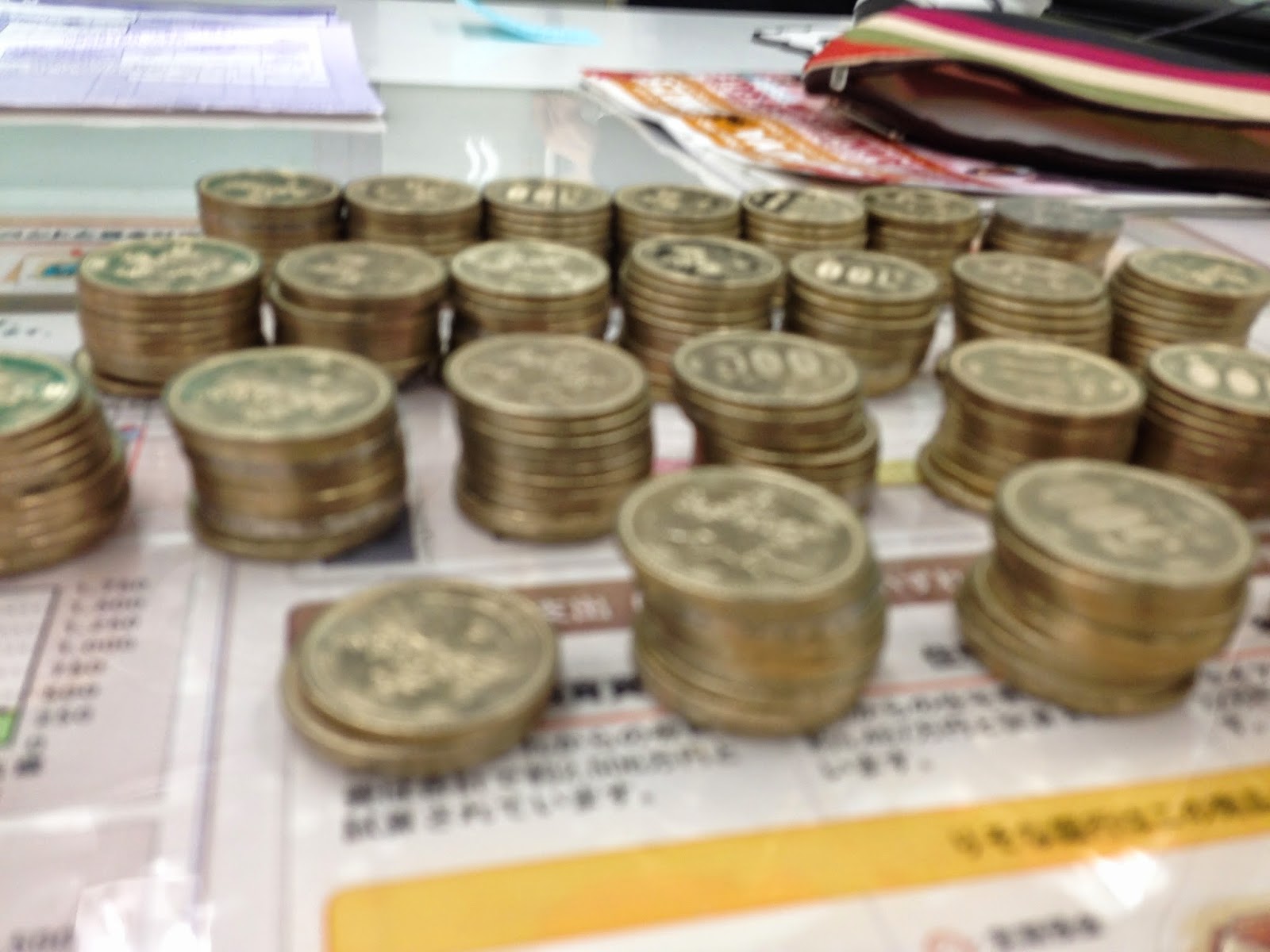
When we lived in Japan, Jean would save any 500 Yen coins in her change in a metal money box. When we left Japan, it weighed several pounds and we forgot about it, and the box was shipped to Hong Kong and then eventually to Philadelphia, and was then lost in the basement for a year or more. But this time we found it, carried it to Japan, and I took it to a bank to change to paper.
They asked me what the total amount was, and I said I had no idea but please check for me in your counting machine and I will accept your answer. But no, they insisted that I count it myself first and then gave me a nice cubicle in which to work, (also so I didn’t annoy the local customers). After counting and completing the paperwork 4 times, mostly the banks fault, not mine, they then counted the money, and so almost exactly 1 1/2 hours after entering the bank I walked out with the equivalent of $1300, wow..
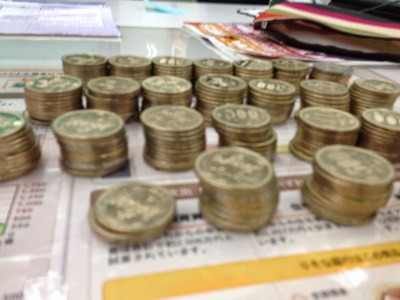 |
| The 500 Yen coins – after counting. |
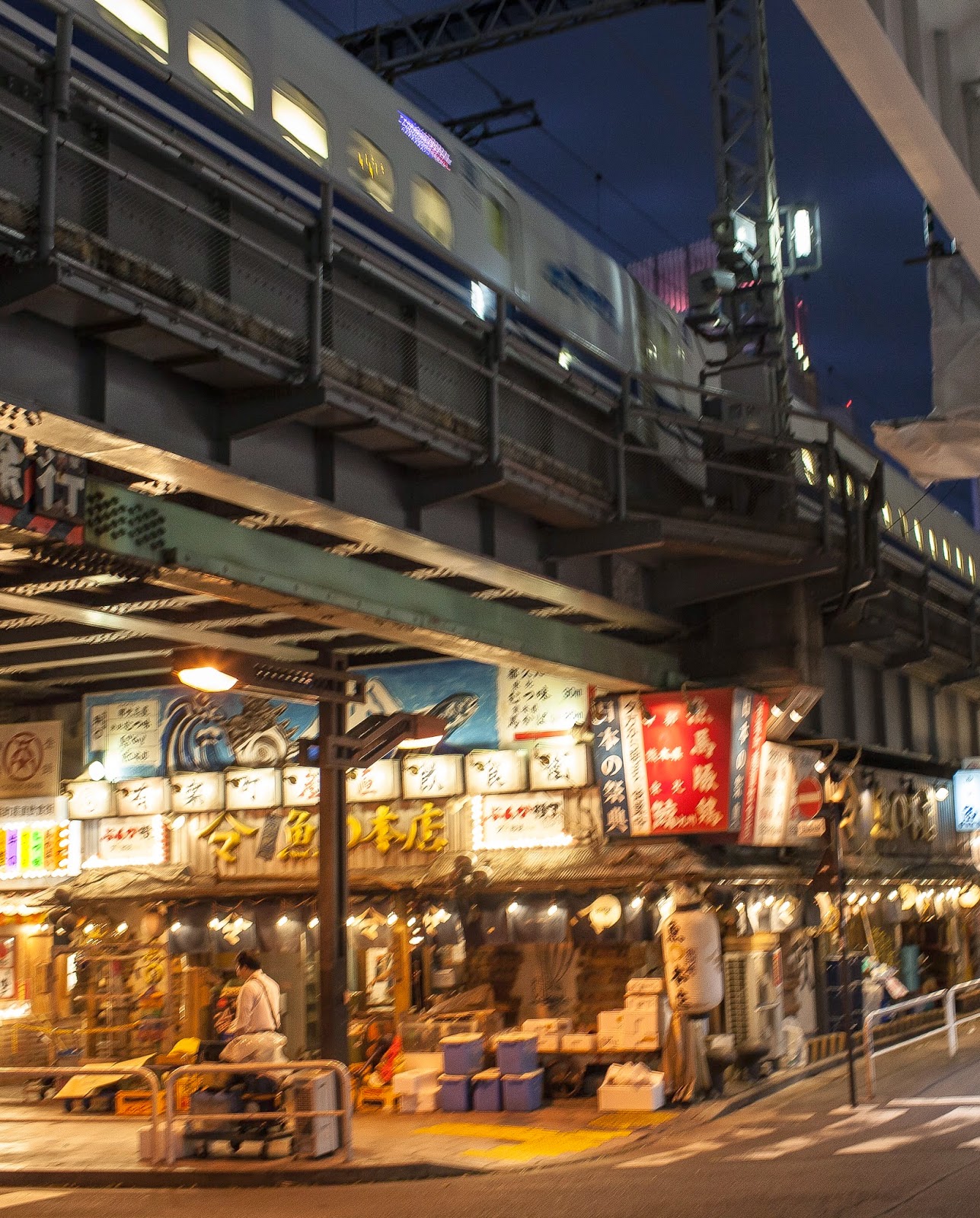
And the bullet trains still keep going, with an average delay of around 20 seconds – here one is passing over a restaurant under the tracks. A nice quiet spot for dinner!
| Restaurant under the bullet train tracks. |
Arrived in Tokyo on Monday evening.
Immediately started to have enormous excitement – waiting for baggage at Narita airport. Unfortunately we were missing Geoff’s bag.
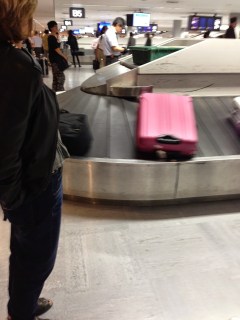
| Waiting for baggage – without success. |
It was lost/delayed in Chicago. After traveling for 20 hours or so, we have been promised baggage delivery on Wednesday evening – 3 days after starting off. How long can one go without buying underwear? Well in Tokyo getting extra-medium is not so easy so maybe just one more day…….
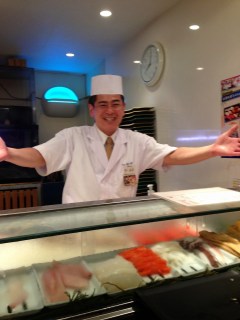 |
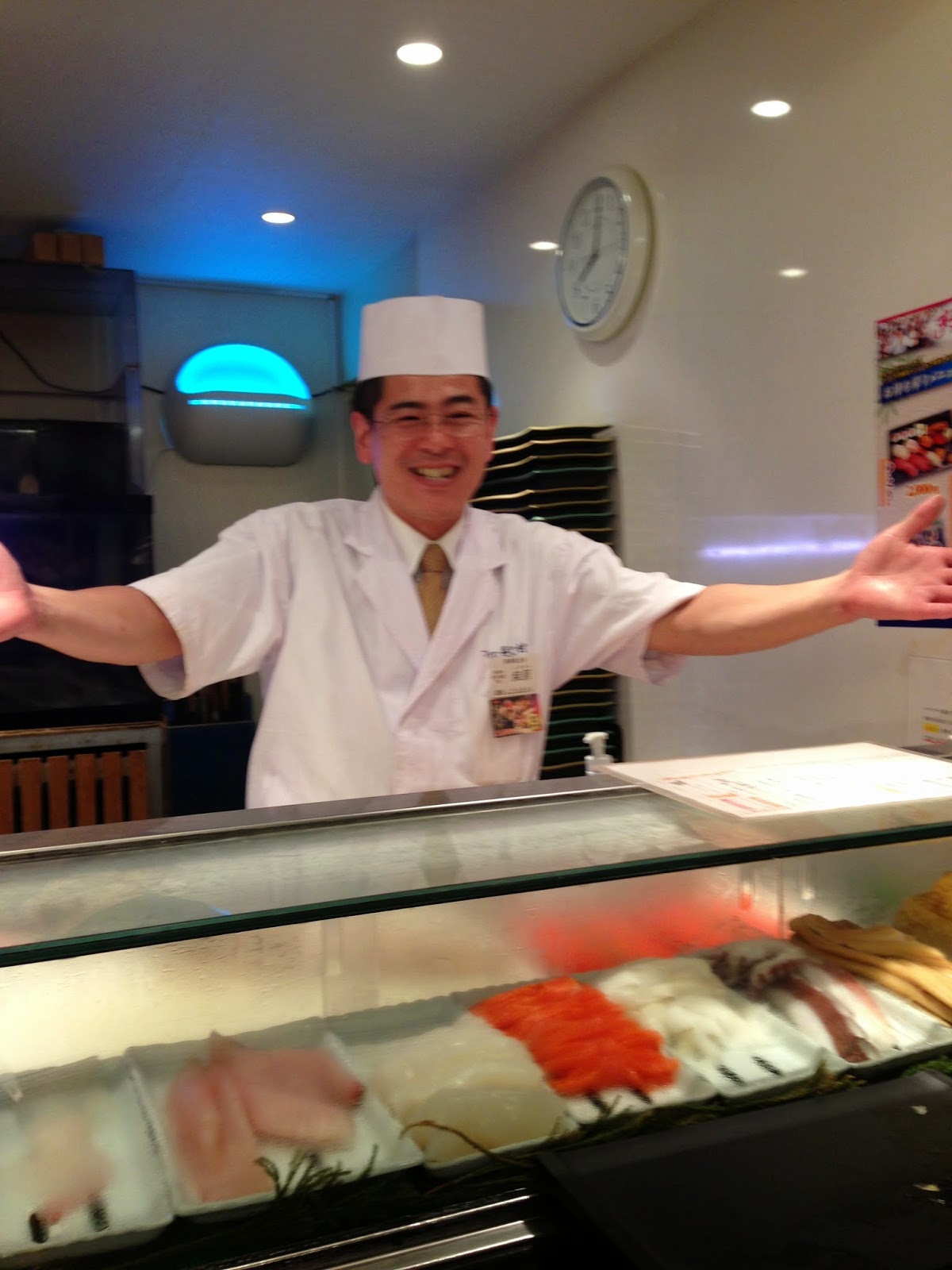
| Friendly sushi chef! |
We also arrived in the middle of a typhoon, which seems a common occurrence here these days. The city was very quiet, seems most folks just stayed home to wait out the storm; but we braved the torrential rain to go out for some sushi!
The sushi was great – just reinforced how average (at best) the stuff is in the burbs of Philadelphia. The sushi chef was welcoming, as always.






 Geoff's travel blog.